

EEG (Electroencephalogram)
An EEG is a non-invasive diagnostic test used to record the electrical activity of the brain and help evaluate brain function.
What is an EEG
An EEG (Electroencephalogram) is a diagnostic procedure that measures the electrical signals produced by brain cells. These signals are detected using small electrodes placed on the scalp. The electrodes capture the brain’s electrical activity and transmit it to a machine that records the signals as wave patterns.
EEG helps doctors study brain function by analyzing these patterns, which can indicate normal or abnormal brain activity. It is a safe, painless test and does not involve radiation, making it suitable for patients of all ages.
What is an EEG Used For?

Bone thinning, fractures, osteoporosis risk .

Fracture risk, bone density loss

Early bone loss in postmenopausal women

Tumors & abnormalities in organs (liver, kidney, heart)

Pelvic, abdominal diseases & Breast cancer

Blood vessel problems (MRA)
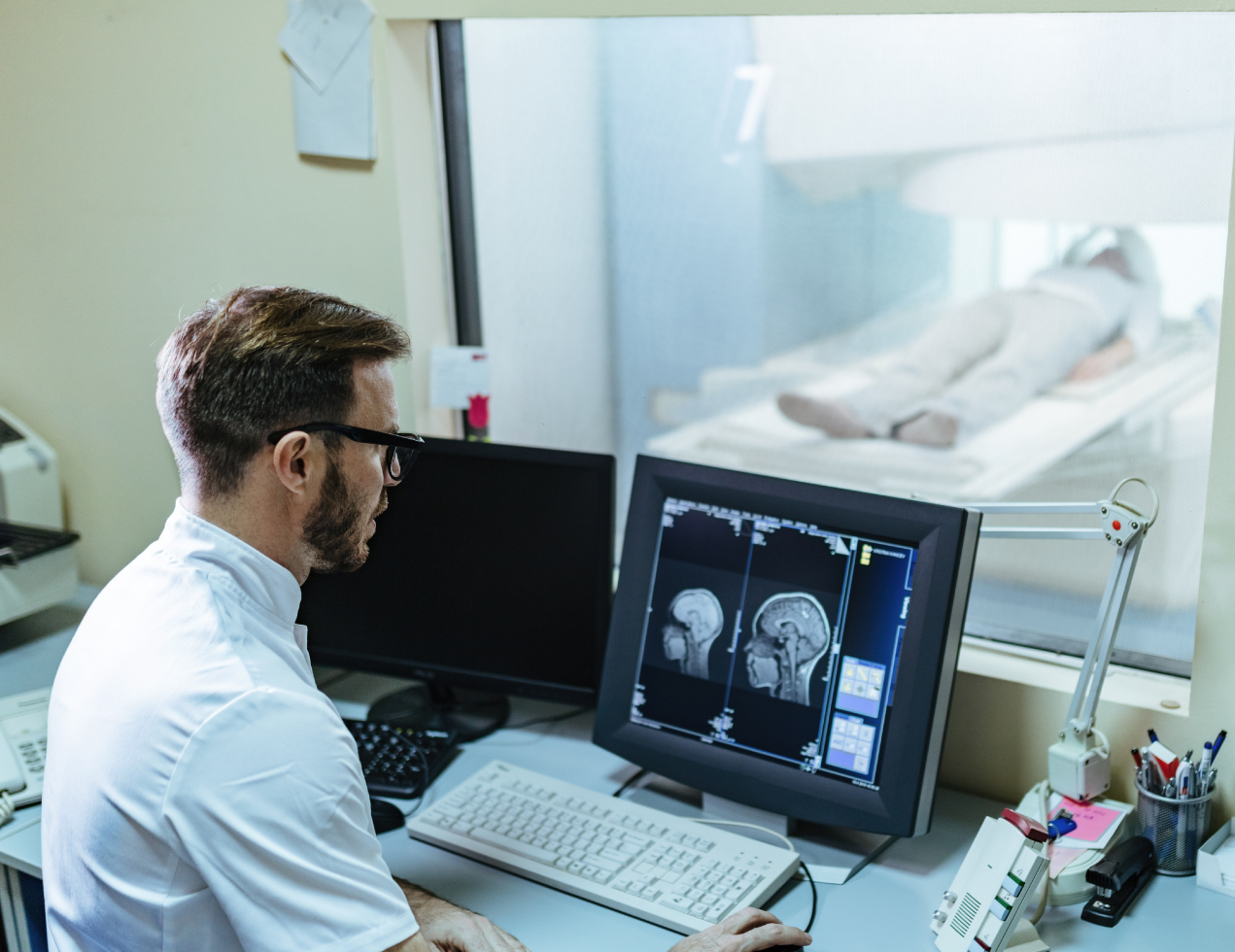
Our EEG Process
An EEG test involves recording the electrical activity of the brain. The process generally involves:
Preparation
The patient is asked to relax in a comfortable position, and the scalp may be cleaned to ensure good contact for the electrodes.
Electrode Placement
Small electrodes are placed on specific areas of the scalp using a conductive gel or adhesive.
Recording
The EEG machine records brain activity over a period of time, which may range from a few minutes to longer sessions depending on the test.
Result Review
The recorded EEG data is analyzed by a neurologist or specialist to identify any abnormal brain wave patterns.
